Checklist: Verifying Toilet and Basin Specifications Before Purchase
Before finalizing a sanitary ware order, validate the procurement checklist covering ceramic body types, drain connections, flush mechanisms, and fixture compliance. This audit list helps buyers confirm that toilet and basin specifications match project requirements and site constraints.
- Verify ceramic body types and wall thickness against load requirements.
- Confirm drain connections, flush mechanisms, and valve compatibility before ordering.
- Check fixture compliance with local building codes and site dimensions.
- Request material certificates and finish samples to prevent on-site surprises.
Why Specification Audits Prevent Costly Errors
Most installation failures in commercial and residential restrooms trace back to a single gap between the drawn specification and the delivered product. A buyer approves a toilet based on a catalog image, but the delivered unit has a different flush valve, drain offset, or ceramic finish. The result is a failed commissioning test, a rework order, or a rejected inspection.
The audit happens before the purchase order is issued. It is a controlled process where the procurement team cross-references the design documents, the manufacturer’s data sheet, and the site survey. This prevents a mismatch between what was ordered and what the plumber expects to receive on site.
The checklist below is built for professional buyers, engineers, and site managers. It covers the technical parameters that determine whether a toilet or basin will perform in its intended environment. Each item includes a brief explanation and a red flag to watch for during the review.
1. Verify Ceramic Body Type and Structural Integrity
The body of the toilet or basin is the primary load-bearing component. For toilets, this includes the bowl, the tank or cistern, and the seat. For basins, it includes the basin body, the pedestal or wall mounting plate, and the drainage aperture. The material is almost always vitreous china, porcelain, or a high-density ceramic composite.
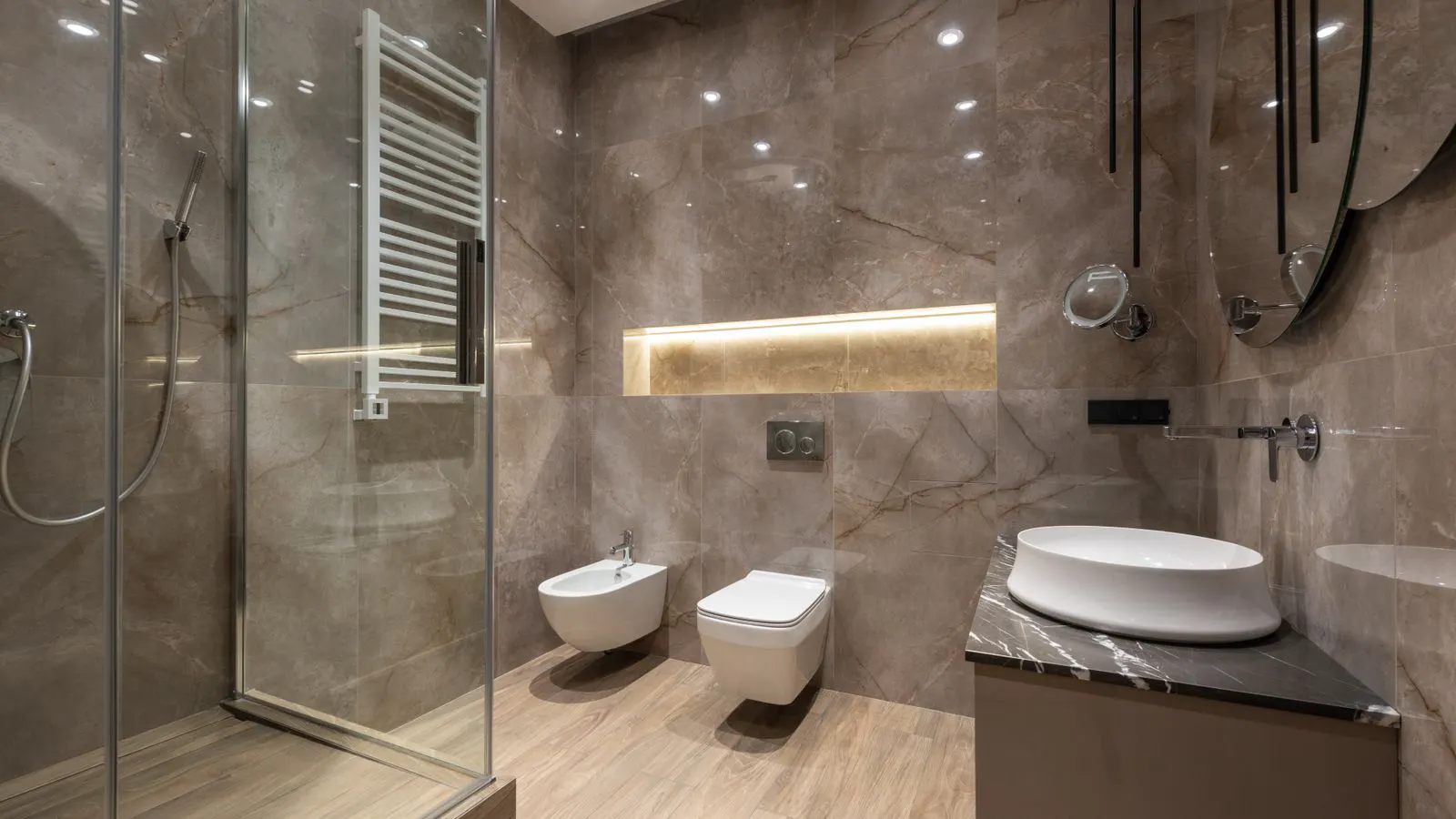
Check the body type against the installation method. A floor-mounted toilet requires a solid base and a specific flange alignment. A wall-hung toilet relies on a concealed cistern and a heavy-duty wall bracket that transfers the load into the structure. A pedestal basin needs a vertical column that can support the user’s weight while the drain remains accessible for cleaning.
Red flag: The data sheet lists a standard floor-mounted toilet, but the site survey shows a thin partition wall that cannot support the weight of a wall-hung unit.
Red flag: The basin is specified with a thick rim, but the local plumbing code requires a rimless design for easier disinfection in high-touch areas.
Red flag: The ceramic body is described as standard vitreous china, but the project requires a high-gloss, stain-resistant finish for a healthcare or hospitality environment.
2. Confirm Drainage and Flush System Compatibility
The connection between the fixture and the building’s plumbing is where most installation problems begin. For toilets, this involves the drain outlet, the flush valve, and the cistern connection. For basins, it involves the waste pipe, the overflow hole, and the trap or connector.
Toilets have several flush mechanisms. A dual-flush system uses two buttons or levers to select a full or partial flush. A single-flush system uses one lever. The flush valve is the internal component that releases water into the bowl. It must match the cistern pressure and the bowl geometry. If the valve is too small for the cistern, the flush will be weak. If it is too large, water may rush out too fast and not fill the bowl completely.
Basins have a waste outlet and an overflow hole. The waste outlet connects to a P-trap or a wall waste pipe. The overflow hole prevents the basin from spilling if the drain is blocked. The trap must be sized correctly to handle the peak flow rate without creating a backflow risk.
Red flag: The toilet is specified with a dual-flush valve, but the cistern is a single-flush model.
Red flag: The basin waste outlet is a 32mm hole, but the standard trap in the site inventory is a 40mm type.
Red flag: The flush valve is listed as a gravity-fed type, but the cistern is pressure-assisted and requires a different valve mechanism.
3. Check Fixture Compliance with Local Codes and Standards
Every jurisdiction has its own building codes, plumbing standards, and accessibility requirements. A toilet or basin that meets the manufacturer’s general specification may still fail a local inspection if it does not meet the specific code for that region.
Common compliance points include the minimum volume of the toilet bowl, the maximum height of the rim from the floor, the size of the basin drain, and the distance from the wall to the fixture. In accessible restrooms, the fixture must meet specific clearances for wheelchair users. In commercial buildings, the fixture must meet fire and life-safety codes for the type of occupancy.
The buyer must request a compliance statement from the supplier. This document lists the standards the product meets and the codes it was tested against. It should match the requirements of the local building authority.
Red flag: The compliance statement references an international standard, but the local code requires a national or regional standard.
Red flag: The fixture meets the standard for a residential toilet, but the project is a commercial restroom with higher usage requirements.
Red flag: The accessibility clearance is listed as 900mm, but the local code requires 1200mm for a specific room type.
4. Review Materials, Finishes, and Hardware
The visible parts of the fixture are not just aesthetic. They affect maintenance, durability, and the overall feel of the restroom. The ceramic glaze is the outer layer of the body. It must be smooth, non-porous, and resistant to scratches and stains. The hardware includes the flush button, the tap, the drain plug, and the mounting plate.
For basins, the tap is a separate component. It must be compatible with the basin’s tap holes. A single-hole basin requires a single tap. A dual-hole basin requires a mixer or two separate taps. The tap finish must match the other hardware in the room. A chrome finish on a brass basin will look inconsistent and will require additional cost to replace.
For toilets, the seat is a separate component. It must be made of a material that resists bacteria and wear. The hinge must be rated for the expected number of openings. In commercial settings, the seat is often removed for cleaning, so the hinge must be secure but easy to detach.
Red flag: The ceramic glaze is listed as matte, but the project requires a high-gloss finish for easier cleaning.
Red flag: The tap is specified as a single-hole type, but the basin has two tap holes.
Red flag: The seat hinge is a standard domestic type, but the commercial usage rate requires a heavy-duty commercial hinge.
5. Validate Dimensions and Site Constraints
The fixture must fit the space. This sounds simple, but it is where many orders fail. The toilet has a front-to-back dimension, a left-to-right dimension, and a height. The basin has a width, a depth, and a height. The wall-hung toilet has a specific bracket depth that must be hidden behind the wall or a panel.
The buyer must compare the fixture dimensions with the site survey. The site survey includes the wall thickness, the floor level, the drain position, and the clearances. A standard toilet may be 700mm wide at the front and 500mm at the back. A wall-hung toilet may be 450mm wide and 400mm deep. These numbers must match the space available.
Red flag: The wall-hung toilet bracket is 150mm deep, but the wall cavity is only 100mm.
Red flag: The basin is 600mm wide, but the counter space is only 550mm.
Red flag: The toilet drain is offset 150mm from the center, but the standard flange is centered.
6. Request Certificates and Sample Approvals
The final step in the audit is to request the supporting documents. The buyer needs the material certificate, the finish sample, and the compliance statement. These documents are the paper trail that proves the product meets the specification.
The material certificate confirms the type of ceramic, the glaze composition, and the hardware material. The finish sample is a small piece of the glaze or a hardware piece that the buyer can inspect in person. The compliance statement is the document that lists the standards and codes the product meets.
If the supplier cannot provide these documents, do not proceed. A missing certificate is a sign that the product has not been fully tested or that the supplier is not a legitimate manufacturer. It is a red flag that the product may not meet the requirements of the project.
Red flag: The supplier provides a data sheet but refuses to provide a material certificate.
Red flag: The finish sample is a photo, but the buyer needs a physical sample to check the gloss and color.
Red flag: The compliance statement is generic and does not list the specific standards for the local code.
7. Final Approval and Order Confirmation
Once the checklist is complete and all red flags are resolved, the buyer issues the final approval. The approval is a signed document that confirms the specification, the quantity, and the delivery date. It is attached to the purchase order and the site file.
The final approval is not a formality. It is the point where the buyer takes responsibility for the specification. If the product arrives and does not match the approved specification, the buyer has a clear record of what was ordered and what was delivered. This record is essential for any dispute or rework claim.
The buyer should also confirm the lead time and the delivery terms. The lead time is the time between the order and the delivery. The delivery terms include the mode of transport, the packaging, and the unloading responsibility. These details must be in the purchase order.
Red flag: The lead time is listed as 4 weeks, but the site survey is only completed 2 weeks before the order.
Red flag: The delivery terms are FOB, but the buyer has no arrangement for the last-mile transport.
Red flag: The packaging is listed as standard cartons, but the fixtures are fragile and require double boxing.
Frequently asked questions
What is the most common specification error in toilet orders?
The most common error is a mismatch between the flush valve and the cistern. The buyer orders a dual-flush valve, but the cistern is a single-flush model, causing a weak or failed flush.
How do I check if a basin will fit a wall-mounted installation?
Measure the wall cavity depth and the bracket depth. The bracket must fit inside the cavity with at least 10mm of clearance on each side. The wall must also be able to support the weight of the basin and the user.
What documents should I request from a sanitary ware supplier?
Request the data sheet, the material certificate, the finish sample, and the compliance statement. These documents confirm the product meets the specification and the local codes.
Can I order a standard toilet for a commercial project?
A standard domestic toilet may not meet the commercial usage requirements. The seat hinge, the ceramic glaze, and the flush valve must be rated for high turnover. A commercial-grade fixture is required.
How do I verify the drain connection for a wall-hung toilet?
Check the drain outlet position and size on the data sheet. Compare it with the site survey. The drain must align with the flange, and the size must match the building's waste pipe.